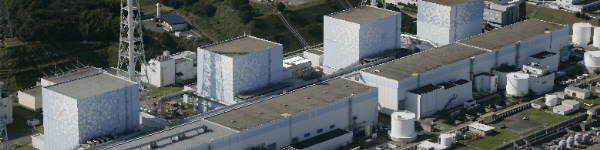
As many as 14,000 deaths in the United States this year may be due to radioactive material from the Fukushima nuclear power plant meltdown in Japan, according to new research in this month's International Journal of Health Services. The authors cite a 4.46 percent increase in deaths in the 14 weeks after arrival of nuclear fallout to the U.S. from the March 11, 2011 disaster, over the same time period in 2010. This is compared to a 2.34 percent increase in the 14 weeks prior to the reactor meltdown.
The study was conducted by epidemiologist Joseph Mangano and toxicologist Janette Sherman, who was also a contributing editor to a 2009 publication on the 1986 Chernobyl nuclear disaster in Ukraine. The authors say they conducted their research to determine if the U.S. death rate changed in the months following the disaster.
According to the paper, the airborne radioactive plume reached the United States six days after the meltdown. Subsequent monitoring of precipitation, milk, water and air by the U.S. Environmental Protection Agency (EPA) found inconsistent levels of fallout across several American cities, ranging from values hundreds of times greater than the norm in Boise, Idaho (390 picocuries of iodine-131 per liter in precipitation vs normal levels of about 2 picocuries per liter), to barely detectable levels in other centers in the country.
EPA data was only 'sporadically' reported and not conclusive, according to the authors, but available figures of subsequent mortalities from the Centers for Disease Control (CDC) are more comprehensive and give greater clues into the effect of the fallout in the United States. Of special significance, the total number of infant deaths across the country rose 1.8 percent from the year before, compared with an 8.37 percent decrease in the prior 14-week period. Infants and unborn fetuses are particularly vulnerable to radiation exposure than older children and adults, because their immune systems are immature and less able to fight off disease. In adults, exposure to radioactive iodine can cause thyroid disease including cancer, and premature aging on a cellular level.
Mangano and Sherman's conclusions are being disputed within the radiation research community. Radiation injury expert Fred Mettler, the U.S. representative for the United Nation's Scientific Committee on the Effects of Atomic Radiation (UNSCEAR), says the report 'doesn't hang together.' To establish that one event caused another, researchers have to show a correlation between the two, something he says is lacking in this paper. "If fallout of radioactive iodine caused instant infant death in this country, what was the mechanism of that death? And did the incidence of those deaths decline when the radioactive iodine levels did?" he asks. "There's a big difference between association and causality."
This study also refers to an increase in Sudden Infant Deaths reported in the western-most Canadian province of British Columbia - from 16 cases in 2010 to 31 so far in 2011. While the B.C. Coroner's office acknowledges radiation exposure could be a factor in these deaths, there is no immediate evidence of such a link.
Read more: